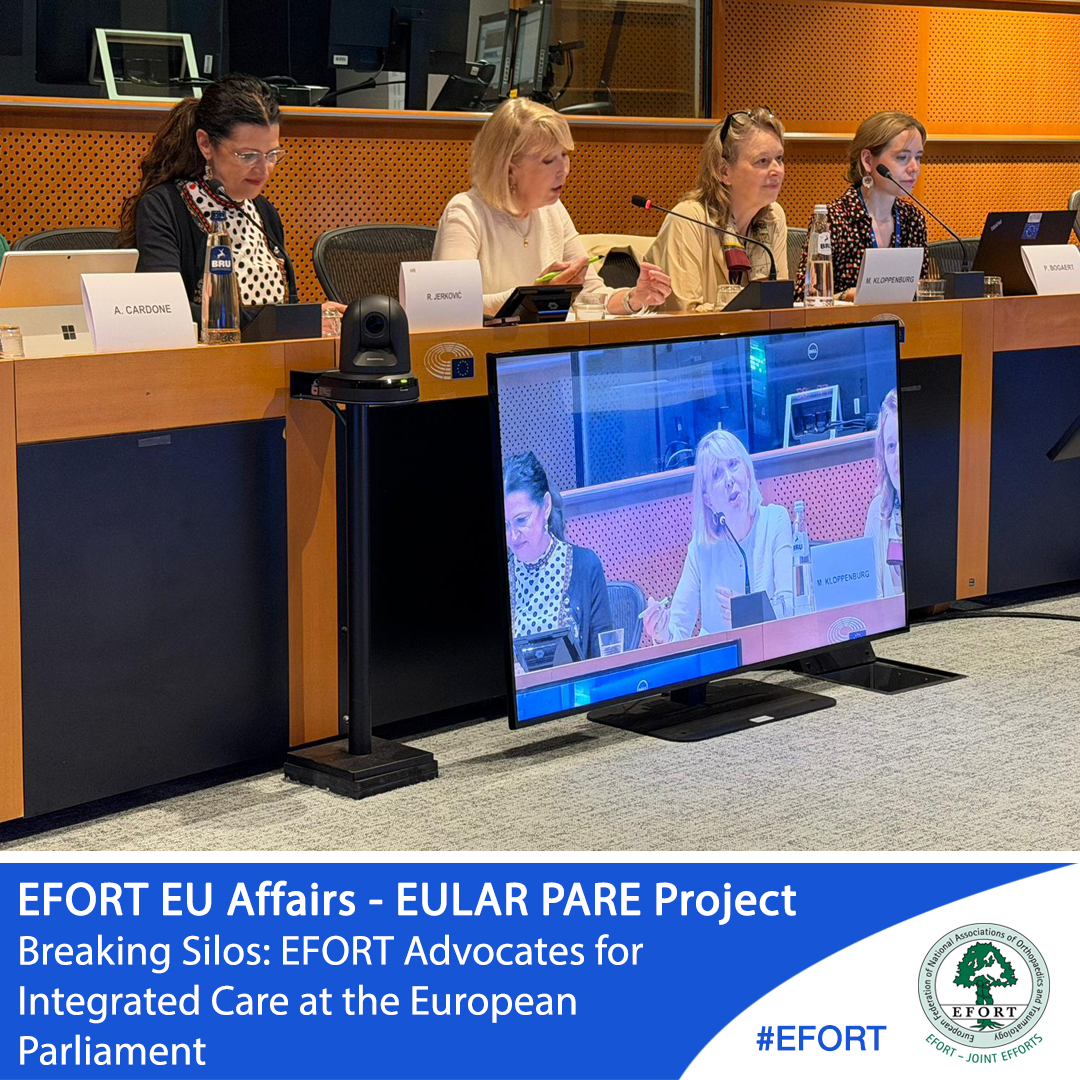
Brussels, Belgium, 23 June 2026
This week, EFORT took an active role in a landmark political discussion hosted by MEP Romana Jerković on behalf of the «MEPs for Rheumatic and Musculoskeletal Disease Action». The high-level meeting, initiated by the European League Against Rheumatism (EULAR) and its Advocacy Chair, Prof. Margreet Kloppenburg, brought together central figures—including Petronille Bogaert from the European Commission’s DG SANTE and Antonella Cardone, CEO of Cancer Patients Europe (CPE)—to confront the rising crisis of musculoskeletal diseases across the continent.
Dismantling the “Disease Silos”
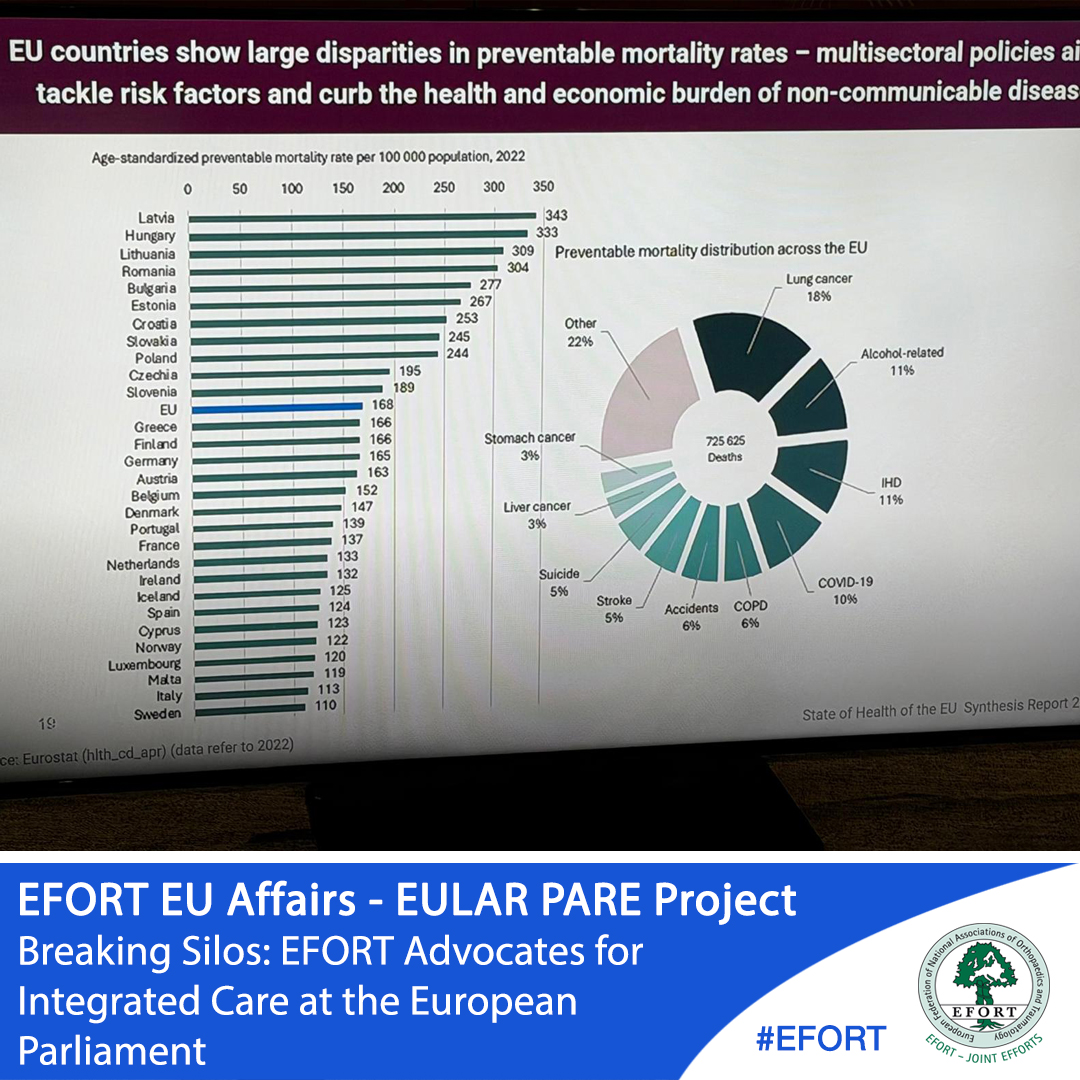
A central theme of the debates was the counterproductive nature of treating chronic illnesses in isolation. Host MEP Romana Jerković, a medical specialist by background, highlighted the profound societal and personal burden of non-communicable diseases (NCDs). As rapporteur for the European Parliament’s report on cardiovascular diseases, Jerković announced that the final text would deliberately integrate comorbidities as a primary health issue, recognizing that musculoskeletal conditions rarely exist alone.
Panellists agreed that operating in institutional silos severely impairs progress across screening, multidisciplinary care, professional education, and clinical research. CPE unveiled concrete recommendations calling for the explicit integration of musculoskeletal health into all national healthcare strategies and the establishment of cross-boundary care standards. From a patient standpoint, Mrs. Antonopoulou (EULAR PARE project) reminded attendees that navigating fragmented hospital departments is overwhelming for patients with multiple conditions, reiterating that integrated treatment paths are demonstrably more financially efficient.
EFORT’s 3-Point Call to Action
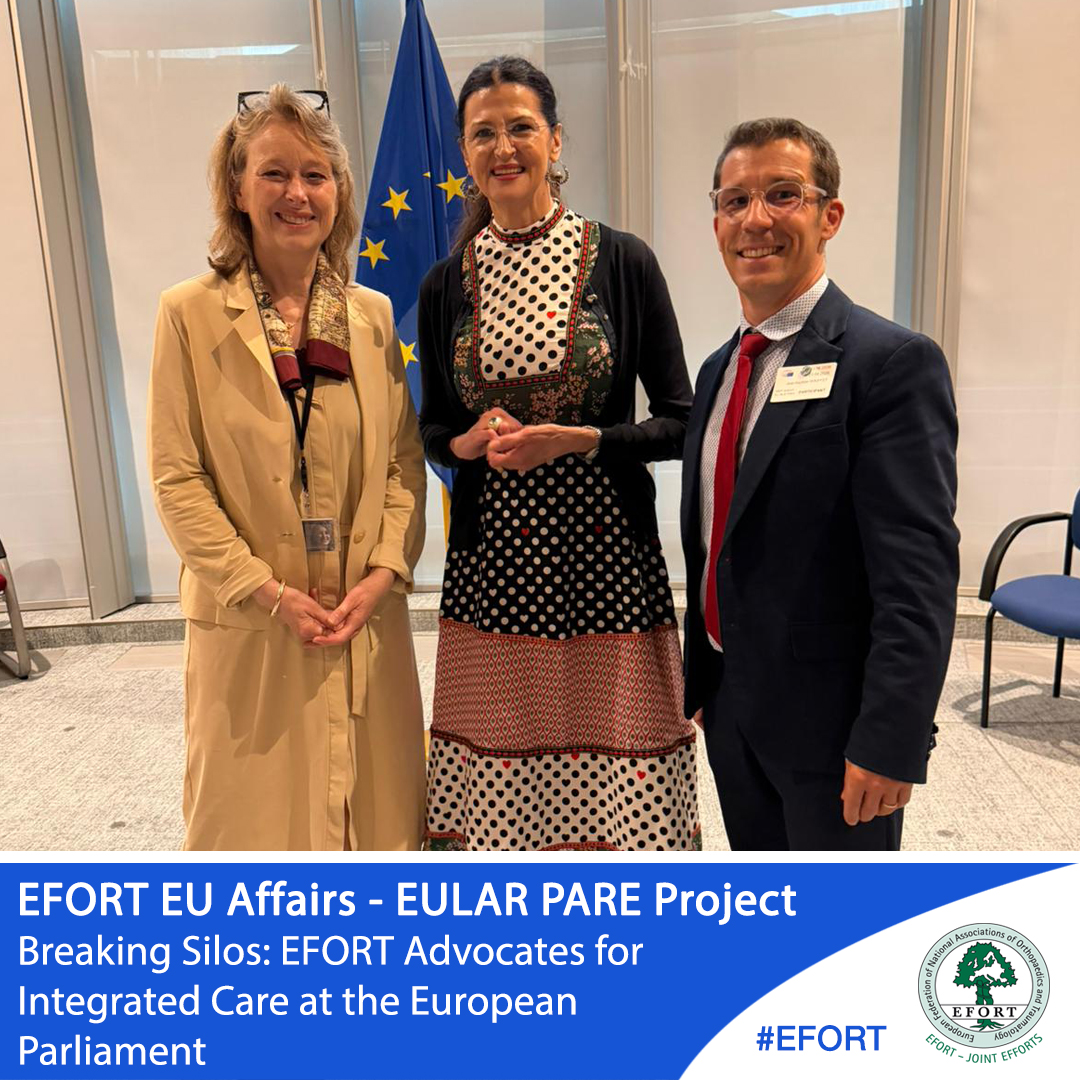
Representing EFORT President Prof. Rob Nelissen, EFORT CEO Jean-Baptiste Rouffet addressed the European Parliament assembly to emphasise that the 27,000 Orthopaedic and Traumatology surgeons represented by EFORT manage the severe impacts of musculoskeletal degradation daily.
Using the clinical example of hip fractures—which drastically diminish patient autonomy and place a massive economic strain on society—Mr. Rouffet outlined three critical steps policymakers must take to improve patient outcomes:
- Overcome Hospital Silos: Healthcare professionals and disparate clinical departments must be structurally incentivised to collaborate seamlessly under one roof.
- A Unified EU Framework: Europe urgently requires a comprehensive, dedicated European Strategy on Non-Communicable Diseases, built with the same level of cross-border synergy and political focus as the current EU strategy on antimicrobial resistance (AMR).
- Protect Health Funding: The upcoming EU Multiannual Financial Framework must safeguard robust funding channels specifically for health to support long-term cooperation between clinicians, scientists, researchers, and patients.
Concluding the session, MEP Romana Jerković formally requested the continued advocacy and unified support of all medical stakeholders present to push for this deeply integrated, pan-European approach to chronic disease management.